Heritage consultant David Hicks brings us the stories behind some of East Lothian’s historic properties.
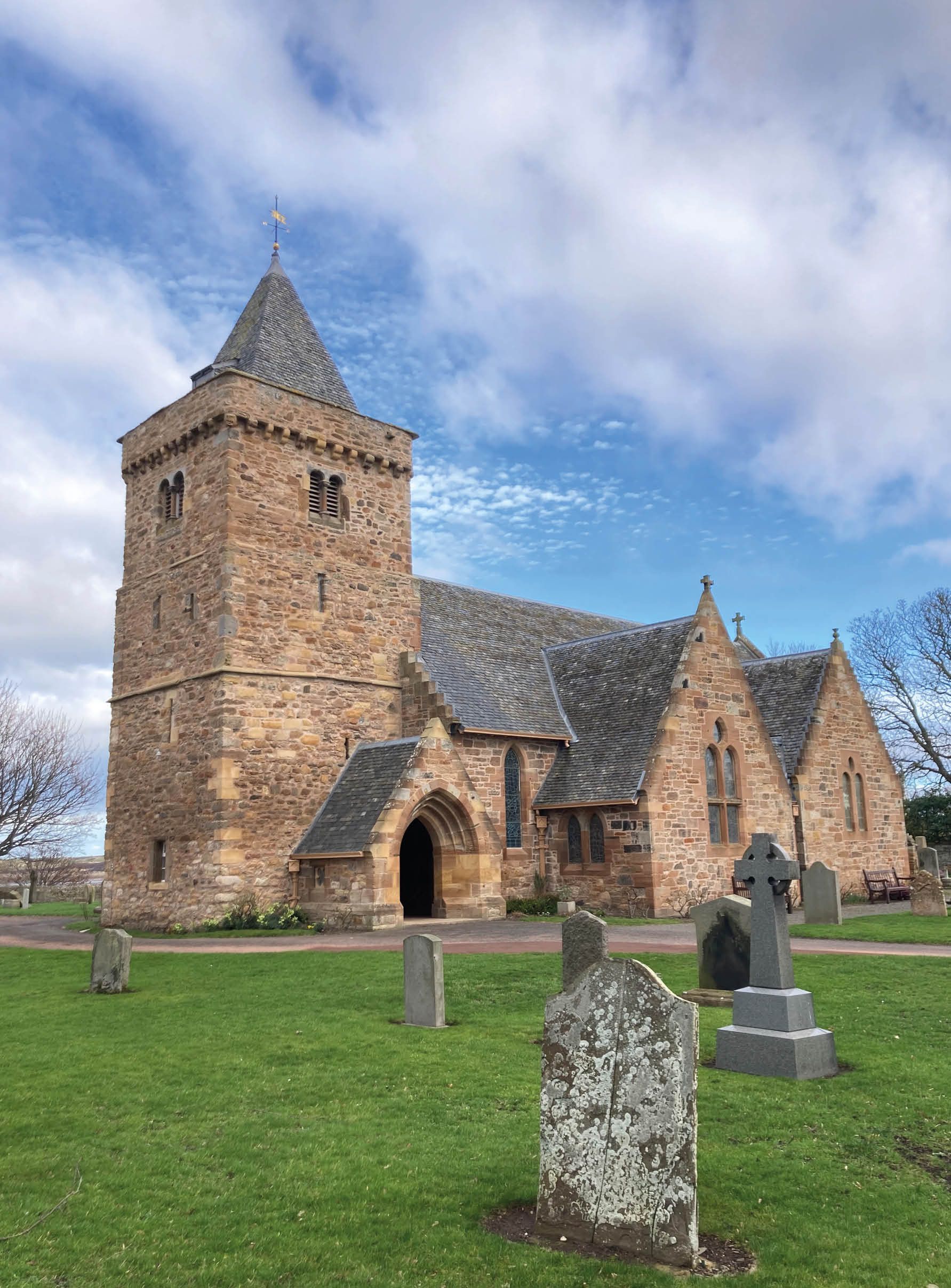
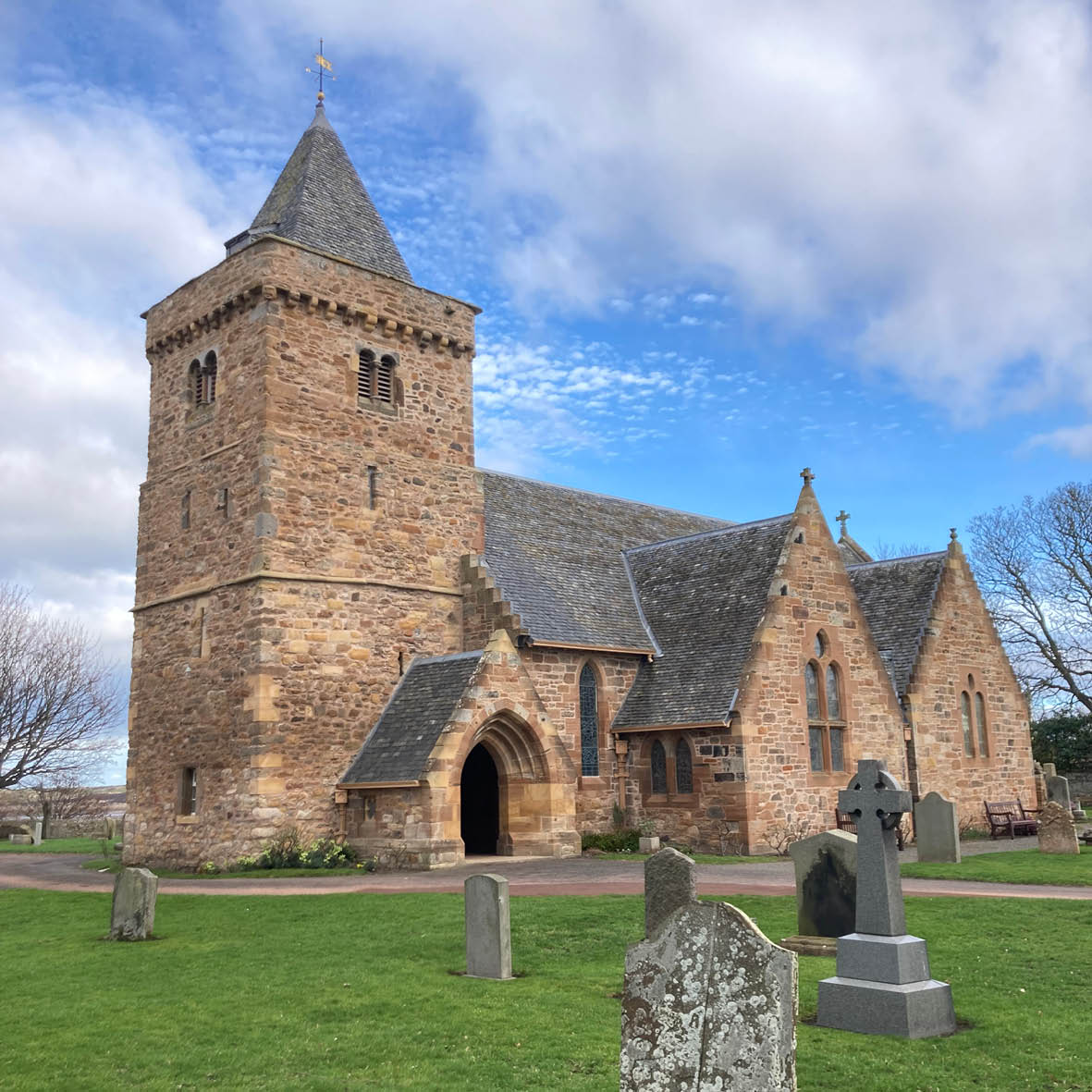
Aberlady’s Parish Church is a distinctive and attractive historic building, but in many ways, it is actually a relative newcomer. There has been a church in the village for at least 1,200 years, which makes the present-day building seem like
a mere stripling.
The earliest records show that a watch tower was built in 1452, with a church added slightly later. The tower is a splendid solid structure with a projecting corbelled parapet and a pyramid-shaped roof. It’s interesting to see narrow arrow-slit windows, a feature more useful for the tower’s original purpose, and how they have been adapted to become a doocot for nesting pigeons on the upper storey.
The main body of the church is largely a Victorian confection but includes burial aisles that probably date to the 1500s and 1600s. There are also two fine monuments, to Louisa Billingham Countess of Wemyss and Lady Elibank, with the latter possibly the work of the famous Italian sculptor Antonio Canova. The stained glass windows were added at this time, designed by the leading firms of Edward Frampton of London and James Ballantine of Edinburgh.
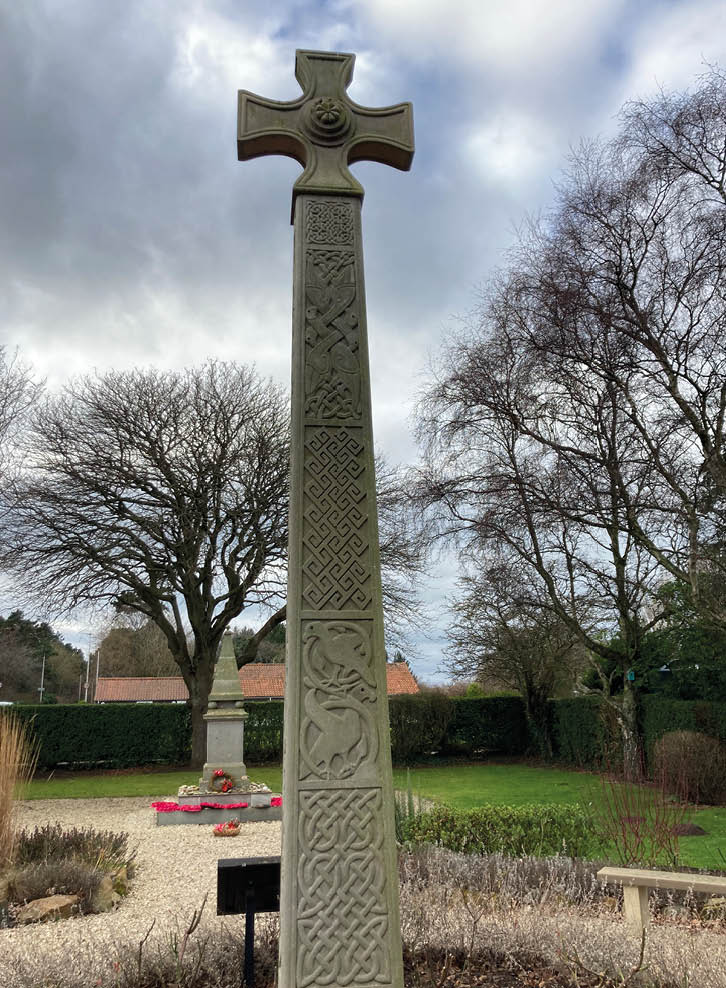
It was shortly before these changes to the church that a surprise discovery shone a whole new light on the history of worship in Aberlady. A fragment of a stone cross dating back to the early Anglo-Saxon period was found in the garden wall of the kirkyard, carved in a style much like the Lindisfarne Gospels. Aberlady was a significant place at that time, probably forming an important staging post on the pilgrimage route between the monasteries of Lindisfarne and Iona.
A reconstruction of the cross now sits in its own garden next to the church, based on the Aberlady fragment and another example from West Lothian. The tall and intricately carved cross gives a very
good impression of what the 8th-century version would have looked like, although the original was probably even more imposing, painted in bright colours and with shining glass or metallic eyes in the carved animals.
I would also recommend exploring the headstones in the kirkyard to see more interesting examples of stone carvings. There is a wealth of examples from the 1700s, incorporating hourglasses, skeletons, angels and the tools of trade that would have been used by the deceased.
What makes this church extra special, though, is that this long-established tradition of worship clearly continues to the present day, and the building remains a key focus for the community.